
RIVM has specialised knowledge centres, ranging across four domains of specific knowledge and expertise. The Executive Office supports all RIVM personnel in the performance of their duties, while the Information Services unit provides support in the fields of ICT and information provision, research methods and data. The institute is managed by a board of directors.
Executive Board
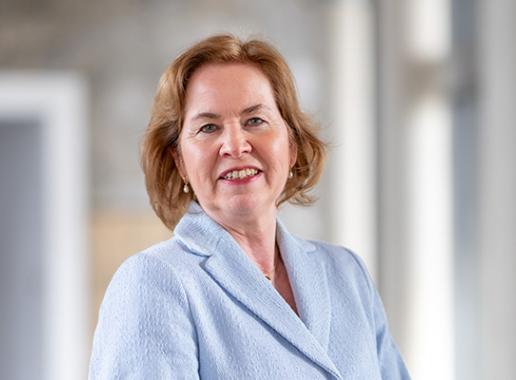
Isabel Arends
Director-General
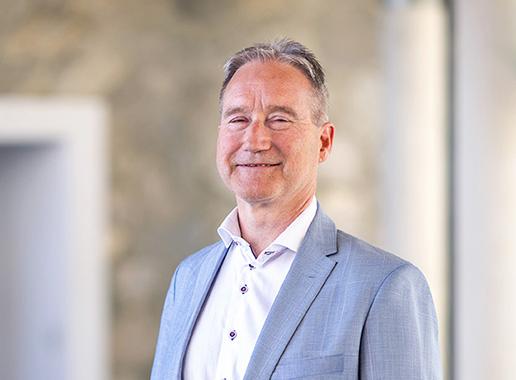
Sicco Louw
Chief Financial Officer
Director Operational Management
Deputy Director-General

Menno de Jong
Director of the Centre for Infectious Disease Control

Charles Wijnker
Director of Environment and Safety

Marith Volp
Director of Public Health and Health Services
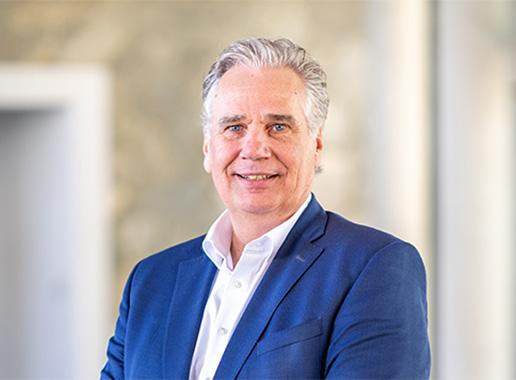
Rob de Haan
Director of Information Services and Chief Information Officer

Daniëlle Schiet
Director of Prevention Programmes and Public Health Upscaling.
Centres
Centre for Infectious Disease Control
This centre coordinates the control of infectious diseases, including effective prevention, close vigilance and quick response in the event of an outbreak, and contributes to reducing health problems related to infectious diseases.
National Coordination Centre for Communicable Disease Control
This centre coordinates the control of infectious diseases and is responsible for rapid and efficient communication about outbreaks nationally and regionally throughout the Netherlands. In the event of an outbreak, the centre is responsible for the scientific advice on outbreak control measures to the government and for implementation by health professionals.
Centre for Infectious Diseases, Epidemiology and Surveillance
This centre analyses and monitors the occurrence and trends in infectious diseases in the Netherlands and carries out studies on the effectiveness and cost-effectiveness of measures to control such diseases.
Centre for Infectious Diseases Research, Diagnostics and Laboratory Surveillance
This centre carries out microbiological research, specific patient and epidemiological diagnostics of infectious diseases, and all laboratory analyses on human infectious diseases.
Centre for Zoonoses and Environmental Microbiology
This centre is responsible for the early warning and risk assessment of the transmission of pathogenic microorganisms from animals, food and the environment to humans in the Netherlands.
Centre for Immunology of Infectious Diseases and Vaccines
This centre advises the Dutch Government on immunology and vaccinology and carries out research to generate knowledge and data on the immune response to infectious diseases and to vaccinations offered in the framework of the government’s infectious disease control programme.
Centre for Safety of Substances and Products
This centre provides advice and practical support to the Dutch Government and international organisations on risk management of chemical substances, products and gene technology. Our objective is sustainable protection and promotion of the health and safety of people and the environment in a time of rapid technological innovation.
Centre for Sustainability, Environment and Health
This centre works for the sustainability of our society so that now and in the future, sustainable use can be made of our environment.
Centre for Environmental Quality
This centre provides reliable information on the quality of our environment. We conduct independent scientific research, with which we create a current impression of the physical environmental quality. We provide tailored information through a variety of avenues: recommendations, direct data delivery, websites and interactive apps. This allows us to contribute to the plans of governments aimed at creating a sustainable and healthy living environment. We work to ensure that our clients and society can understand our knowledge and insights.
Centre for Environmental Safety and Security
This centre focuses on the physical safety in the Netherlands with regard to the threat of accidents and events, and the consequences of such events. These activities cover accidents with chemical, biological, radiological and nuclear agents (CBRN agents), and all other physical accidents and disasters.
Centre for Public Health, Health care and Society
This centre conducts research in the broad field of public health and health services. This includes the state of public health today and projections for the future, the impact of preventive measures, health care innovations and changes in the health care system. The centre has specific expertise in the fields of monitoring, foresight studies and modelling. It brings together scientific knowledge from within RIVM and elsewhere and uses it to highlight socially relevant issues, place them on the agenda and provide advice.
Centre for Health Protection
This centre focuses on the health impacts and risks to people of chemical and biological agents, with special attention to medicines, medical products, tobacco, consumer products, diet and food components, and interaction with life style factors.
Centre for Prevention, Lifestyle and Health
This centre focuses on knowledge in the field of promoting healthy behaviour. It conducts research into behaviour, life-course and lifestyle issues, with a special focus on nutrition and chemical food safety. In addition, the centre brings together scientific and practical knowledge from within RIVM and elsewhere. The aim is to put that knowledge at the service of society, for example by using it to support policymakers and professionals.
Centre for Population Screening
This centre directs and coordinates the eight national population screening programmes offered by the Dutch Government. It is also responsible for the National Influenza Prevention Programme.
Established RIVM tasks have been combined into a new RIVM domain: Prevention Programmes and Public Health Upscaling. The domain has two primary tasks: to organise prevention programmes, such as population screening, immunisation programmes and other screenings, and to ensure that the Netherlands can rapidly scale up the public health response during large-scale infectious disease outbreaks.
Four centres
- The Centre for Management of Prevention Programmes and Crisis Management (RPO) directs the chain of prevention programmes and upscaling.
- The Centre for Digitalisation for Prevention Programmes and Crisis Management (DPO) focuses on information services and digitalisation.
- The Centre for Supply Chain for Prevention Programmes and Crisis Management (SPO) ensures efficient planning, procurement, storage and distribution.
- The Centre for Coordination & Services for Prevention Programmes and Crisis Management (CPO) is responsible for contact with individual citizens and the public, coordination of implementing the programmes, and information registration.
Each centre works to harmonise the infrastructure and processes of our programmes wherever possible, ensuring that they are and will remain future-proof. These four centres are jointly responsible for the prevention programmes and public health upscaling.
Population screening programmes, immunisation programmes and screenings
The domain directs and coordinates the national prevention programmes offered by the Dutch Government. We organise the population screening programmes for cervical cancer, breast cancer and colorectal cancer. We also organise the National Immunisation Programme for childhood immunisations, and adult vaccinations against influenza (flu), pneumococcal disease and COVID-19.
We organise prenatal and postnatal screening during pregnancy and after childbirth. Various prenatal screening tests are offered during pregnancy:
- A general blood test for pregnant people: Prenatal Screening for Infectious Diseases and Erythrocyte Immunisation (PSIE);
- A blood test to check the baby: Noninvasive Prenatal Testing (NIPT);
- The 13-week scan and the 20-week scan: Structural Echoscopic Testing (SEO in Dutch).
- After the baby is born, postnatal screening tests are offered:
- Neonatal heel prick screening (NHS in Dutch).
- Neonatal hearing screening (NGS in Dutch).
National Functionality for Upscaling Infectious Disease Control
There is a realistic chance that the Netherlands will once again face large-scale infectious disease outbreaks in the coming years. The COVID-19 pandemic highlighted the need for better preparedness. Rapid upscaling and central coordination of medical-operational processes, such as testing, vaccination and source and contact tracing, are essential during such an outbreak. This crisis response organisation is part of the domain for Prevention Programmes and Public Health Upscaling.
Within the domain, we work closely with partners in the chain and prioritise the needs of the Dutch population. In doing so, the domain contributes to public health protection, focusing on prevention as well as crisis response.
Staff services
The specialised knowledge centres receive professional support from a central operational management organisation.
Information Services Unit
The Information Services Unit works not only for RIVM, but also for a number of the government’s other knowledge institutions, including the Royal Netherlands Meteorological Institute (KNMI) and the three planning agencies. We offer these clients support with regard to ICT infrastructure, office automation, systems development, application management, geographic information systems, data logistics, research methods and data services.