
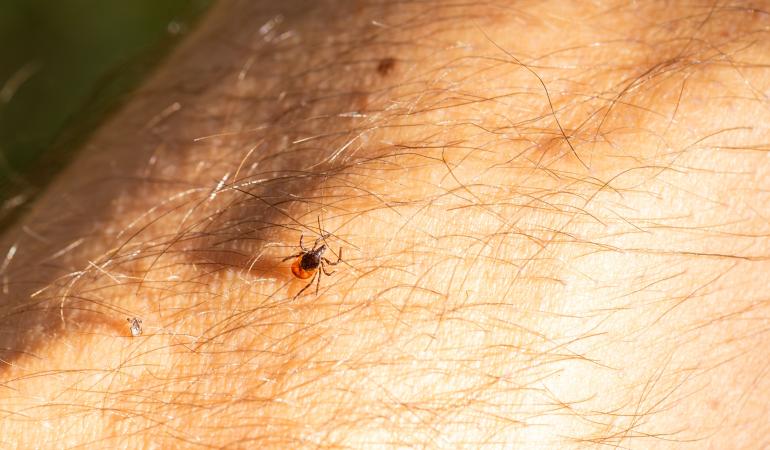
Figures from Tekenradar.nl show that in 2025, the Dutch reported the highest number of tick bites in five years. In recent weeks, the number of tick bites has been on the rise, and with it the risk of disease. That is why, during the ‘Week van de Teek’ (Tick Bite Prevention Week), RIVM is focusing on the rapid removal of ticks to prevent disease.
Weekly reports
Tekenradar.nl’s weekly reports show that there were more tick bites, not just more reports, in 2025. Every week, several hundred Dutch people report whether they have been bitten by a tick. In this group, too, the number of reports in 2025 was considerably higher than in the previous years. For example, over a three-week period, approximately 25% of the weekly reporters were bitten by a tick. In 2023 and 2024, this figure remained below 20% throughout the year.
{tekenbeten::20260326-tekenbeten-provincie}
Most likely to get a tick bite in Drenthe
Last year, the probability of a tick bite was highest per capita in the provinces:
- Drenthe (142 reported tick bites per 100,000 inhabitants)
- Gelderland (83 reported tick bites per 100,000 inhabitants)
- Flevoland (79 reported tick bites per 100,000 inhabitants)
The probability of a tick bite last year was the lowest per capita in the provinces:
- Zuid-Holland (22 reported tick bites per 100,000 inhabitants)
- Noord-Holland (29 reported tick bites per 100,000 inhabitants)
- Noord-Brabant (40 reported tick bites per 100,000 inhabitants)