
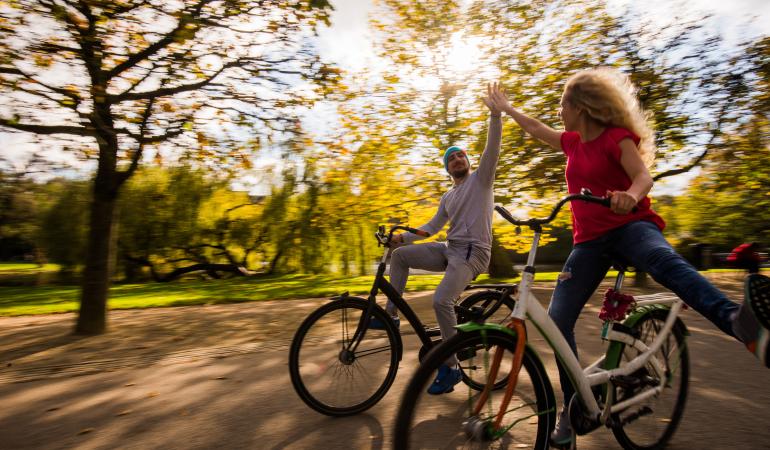
The National Institute for Public Health and the Environment (RIVM) has investigated the progress and outcomes of the Dutch Action Plan on Physical Activity, implemented between 2023 and 2025. The plan, created by the Ministry of Health, Welfare and Sport (VWS), aims to support the national government, societal actors and municipalities in promoting physical activity in the Netherlands. The evaluation shows that after 2.5 years, positive changes are visible, but more could have been achieved.
Half of the Dutch population is not sufficiently physically active, which is why the Action Plan was developed. The aim of the government is for 75 percent of Dutch people to be sufficiently physically active by 2040.
More attention and cooperation
After 2.5 years, a number of positive changes were observed. For example, several ministries other than VWS have devoted more attention to physical activity. Also, the number of parties that have joined the network organisation ‘de Beweegalliantie’ (Physical Activity Network Alliance): has risen from 442 in 2024 to 585 in 2025. This has, in turn, led to new collaborations that help people to be more physically active. Moreover, within municipalities, a growing number of domains are collaborating on the topic of physical activity.
Mainly simple actions implemented
One of RIVM’s conclusions is that more could have been achieved. For instance, there was little new policy from ministries to promote physical activity at school or at work, both environments where people spend much of their time sitting. Furthermore, mainly more ‘simple’ actions resulted from the Action Plan, like sharing knowledge and increasing collaboration, which have limited impact on the overall physical activity system.
Powerful, structural actions needed
To achieve the government’s target, RIVM recommends that ongoing efforts using a systems approach are needed in the coming years. This will also require actions to change societal beliefs related to physical activity. For instance, by creating robust policies, such as requiring municipalities to ensure that the environment encourages people to be more physically active. Furthermore, by ensuring a steady flow of funds for continuing physical activity policy. In addition, policymakers can do more to link physical activity to other topics, such as mental health, climate and housing.
RIVM also recommends implementing policy on physical activity over multiple years, independent of changes in government and policy programmes. This is important, as it takes considerable time before increases in physical activity become noticeable.