
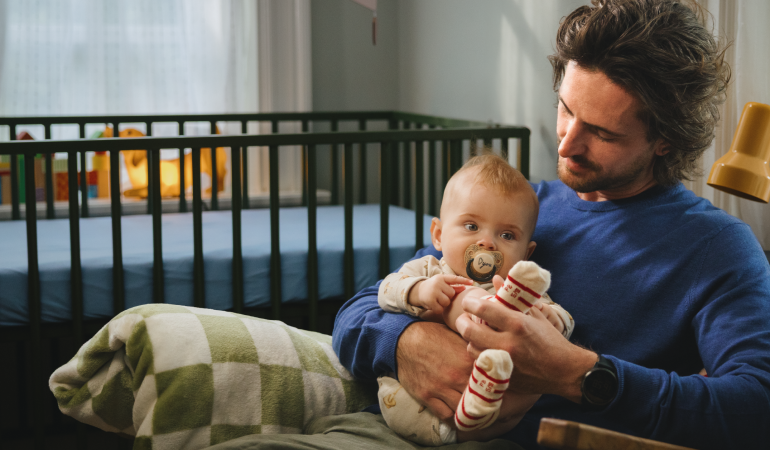
With autumn approaching, the RSV immunisation programme is resuming today, in which babies receive an injection as protection against RSV. This protects them from serious RSV infections, which are most prevalent in autumn and winter. Babies receiving an injection are 80% less likely to end up in hospital as a result of an RSV infection. The injection has been offered as part of the National Immunisation Programme to all babies up to the age of one since 2025.
Respiratory Syncytial Virus (RSV)
RSV causes respiratory infections such as the common cold and can be particularly dangerous for young babies. They may experience shortness of breath or develop pneumonia. Prior to the injection’s introduction, between 1,500 and 3,000 babies were admitted to hospital each year with an RSV infection.
Hospital admission 80% less likely
More than three-quarters of babies were immunised against RSV over the past year. Babies receiving the injection were 80% less likely to be hospitalised as a result of an RSV infection than those not receiving the injection. This is evident from the initial findings of a study carried out in ten Dutch hospitals. As a result, children’s hospitals were under far less pressure than in previous years. Other countries that also introduced the antibody injection, such as Spain, Portugal and Belgium reported 80% fewer hospital admissions as a result of an RSV infection.
Few side effects
The injection has few side effects. Research (in Dutch) by Lareb, a centre that monitors adverse drugs reactions, showed that the majority of babies had no symptoms last year following an injection. If babies did experience symptoms, these usually entailed ‘increased crying’ and ‘irritability’.
How the injection works
The RSV injection does not involve vaccination but immunisation. As the injection contains antibodies against the virus, a baby’s immune system does not need to produce these antibodies itself, as it does when receiving a vaccination. The injection offers almost immediate protection that lasts around six months.
Date of birth determines the timing of the injection
Babies receive the injection once, during their first year of life. This is often given before or during autumn and winter, as RSV is most prevalent during this period. Protection is vital at this time of the year and is why the timing of the injection depends on the date of birth:
- Babies born between 1 April and 30 September will receive the injection in September or October.
- Babies born between 1 October and 31 March will receive the injection within two weeks of birth.
Parents will receive information from a provider of obstetric care at a Well-Baby Clinic or from RIVM. The Well-Baby Clinic will arrange the appointment for the injection.