
In 2025, 71 per cent of people had (Per- and polyfluoroalkyl substances) levels in their blood above the health-based guidance value. This is shown by new RIVM research. In the previous study, which used blood samples from 2016 and 2017, this was the case for almost everyone. To further reduce the amount of PFAS people take in, a broad approach is needed that addresses all PFAS and all sources of exposure.
This study does not allow RIVM to determine exactly what the measured (Per- and polyfluoroalkyl substances) levels mean for individual health. People do not immediately become ill from PFAS. However, PFAS are known to have effects on the body. For example, the immune system may function less effectively. These effects depend on the amount of PFAS, the duration of exposure and the individual’s health.
PFAS levels in blood across the Netherlands remain too high, particularly PFOS
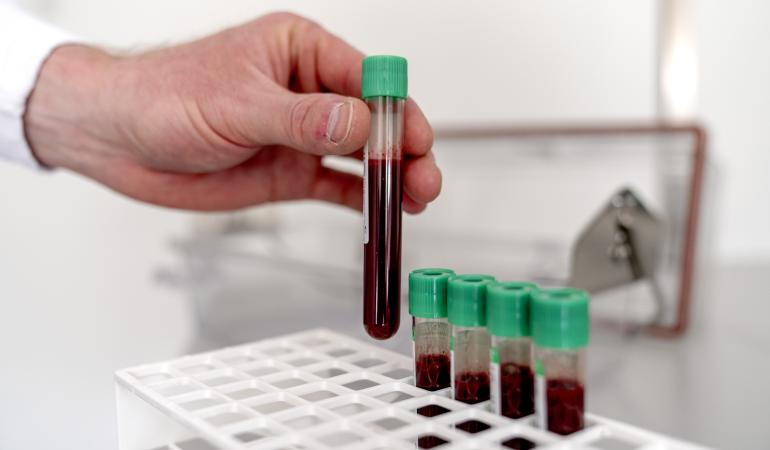
RIVM analysed blood samples from a total of 967 people. Almost all participants had at least four PFAS in their blood: PFOA, PFNA, PFHxS and PFOS. PFOS levels were highest, followed by PFOA.
RIVM also examined the combined levels of ten PFAS. The results show that 71 per cent of adults have PFAS levels in their blood above the health-based guidance value. This is a smaller proportion than in the previous blood study. The lower PFAS levels now found in blood are consistent with the decline observed in Western Europe.
Focus on the Dordrecht and Western Scheldt regions
In this study, RIVM paid particular attention to the areas around Chemours and the Western Scheldt. Residents in these areas have been exposed to higher levels of PFAS for some time. Emissions from factories may be one of the causes.
RIVM is now reviewing the scientific literature to establish what is known about possible health effects when PFAS concentrations in blood exceed the guidance value. RIVM is also investigating whether certain health effects that may be linked to PFAS are more common in these areas.
Higher measured levels in some regions
In Zeeuws-Vlaanderen, blood measurements were carried out for the first time in 2025. Elevated levels of seven PFAS were found in these participants: PFOA, PFNA, PFDA, PFUnDA, PFHpS, PFHxS and PFOS. The largest differences were found for PFOS and PFHpS, with levels up to seven times as high as in the rest of the Netherlands. This study does not identify the cause.
North of the Western Scheldt, the measured levels of PFNA, PFDA and PFOS are up to twice as high as in the rest of the Netherlands. However, these levels are lower than in the previous study, which used blood samples from 2016 and 2017.
Around Chemours in Dordrecht, PFOA levels are again slightly elevated compared with the rest of the Netherlands. The measured PFOA levels are lower than in the previous study. As in the previous study, GenX (HFPO-DA) was not detected in the blood.
Broad approach needed from government authorities and companies
To further reduce the amount of PFAS people take in, a broad approach is needed that addresses all PFAS and all sources of exposure.
Since 2024, all PFAS have been included on the list of Dutch Substances of Very High Concern (ZZS). Companies are therefore required to minimise emissions and the use of these substances.
Government authorities can use legislation to restrict the production and use of PFAS. A proposal for a broad ban on PFAS under the REACH legislation is currently being considered at European level. Over time, this ban should reduce exposure to PFAS through food, drinking water and the environment.
RIVM recommends continuing to measure PFAS in blood regularly over the coming years. This will make it possible to monitor whether measures taken by government authorities and companies are having an effect.
PFAS research programme
This is RIVM’s third study into PFAS in humans. Together with the study into PFAS in breast milk, the two blood studies provide a good picture of how much PFAS people in the Netherlands have in their bodies.
This study is part of the PFAS research programme. The aim of this programme is to identify how the Dutch population’s exposure to PFAS can be reduced. To this end, RIVM investigates how much PFAS people take in and through which routes. We also investigate how much PFAS is present in the environment and in humans. The PFAS research programme was commissioned by the Ministries of Health, Welfare and Sport (VWS), Infrastructure and Water Management (IenW), and Agriculture, Fisheries, Food Security and Nature (LVVN).