
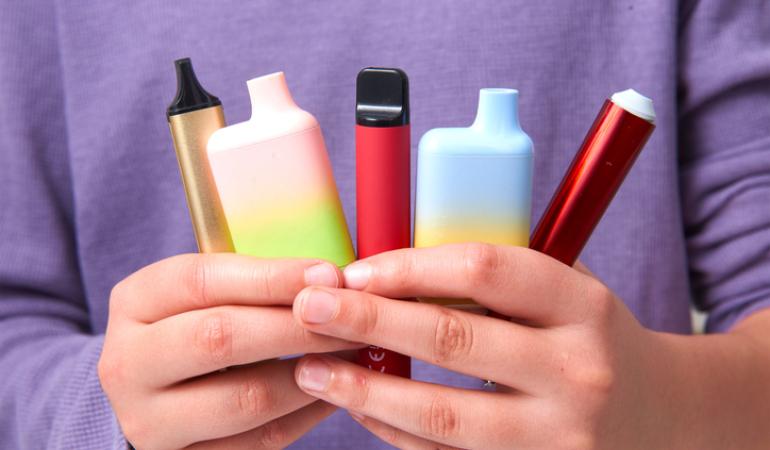
The appeal and consumption of e-cigarettes are influenced not only by the sweet flavours but also the colour, as revealed by a study by Ina Hellmich (RIVM). For that reason she has called for the introduction of a standard, neutral design for e-cigarettes, following on from the flavour ban. Hellmich will conclude her PhD at Wageningen University & Research (WUR) today, on this topic.
Hellmich’s research reveals that the colours already influence the flavour experience as soon as people see or smell a product. This can help manufacturers make e-cigarettes more appealing. Even if precisely the same flavoured tobacco was used in e-cigarettes, tests candidates for example described a red e-cigarette as tasting sweeter than the same e-cigarette in white or brown.
Sweet e-cigarette flavours are just as appealing as sweet food flavours
The study also discovered that sweet e-cigarette flavours were perceived as just as appealing as sweet food flavours. Researchers expected to see a difference between smokers and non-smokers, but this proved not to be the case. Both groups found sweet e-cigarettes to be highly appealing, while neither group was attracted to savoury flavours.
Effect of the flavour ban
Since 2024, a ban has been in place in the Netherlands on all other flavours than tobacco, in e-cigarettes. Research indicates that this flavour ban is effective. Forty percent of e-cigarette users have vaped less due to the ban, and 22 percent have in fact stopped entirely. This effect was just as strong among young people (13-24-year-olds) as it was among adults (25 years and older). It also emerged that some people continue to smoke e-cigarettes with sweet flavours. The majority purchased these products abroad.
Neutral e-cigarette
Flavour and colour therefore influence the attractiveness and consumption of e-cigarettes. Previous studies revealed that in addition to colour, other design characteristics can increase a product’s appeal. Hellmich therefore recommends introducing a standardised (neutral) e-cigarette. Measures of this kind should preferably be introduced Europe-wide, to prevent people purchasing these products abroad.