
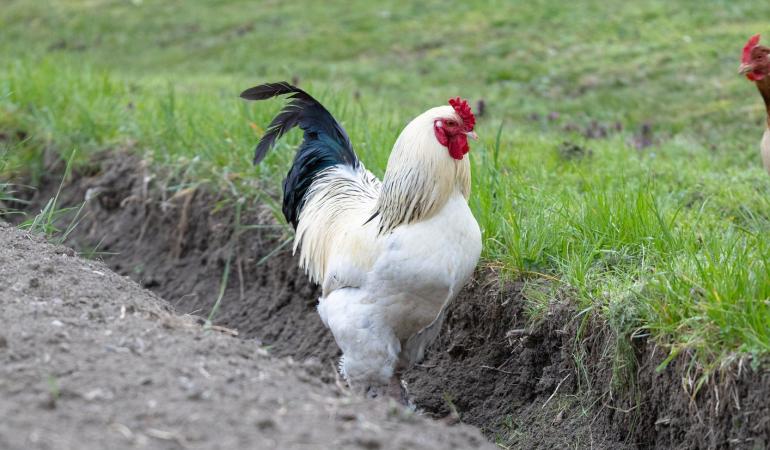
In April 2025, RIVM concluded that home-produced eggs across the Netherlands may contain much more (Per- and polyfluoroalkyl substances) than commercial eggs. New RIVM research confirms that this is mainly due to worms that chickens pick up from the soil.
RIVM investigated the source of (Per- and polyfluoroalkyl substances) in home-produced eggs. Home-produced eggs come from chickens kept as a hobby. For example in gardens, allotments, animal pastures and care or children’s farms.
Worms are an important source
The highest amounts of PFAS were measured in eggs from hobby chickens that roam outside. RIVM often found large amounts of the same PFAS in worms as in the eggs. RIVM therefore concludes that worms are an important source of PFAS in home-produced eggs. Other soil animals also contain a lot of PFAS. The origin of PFAS in the soil at the locations of the hobby chickens was not investigated.
Water, soil, straw or sawdust, and wood from chicken coops can also contribute to the amount of PFAS in eggs. However, much lower levels of PFAS were found in these materials than in soil animals.
Amount of PFAS varies per measurement
Many chickens lay no or fewer eggs in winter. It was expected that the amount of PFAS in the first eggs after winter would therefore be significantly higher. This turned out not to be the case. The amount of PFAS measured varies by location and can change from day to day. This study did not find an explanation for these differences. The result of a measurement therefore only reflects the eggs that were tested at that moment.
Research into current exposure to PFAS
PFAS is present in the environment throughout the Netherlands. This is caused by emissions from industry and through consumer products. Once in the environment, PFAS hardly breaks down.
People in the Netherlands ingest more PFAS through food and drinking water than the health-based guidance value. PFAS in home-produced eggs can lead to a significant additional exposure.
As part of the PFAS research programme, RIVM is investigating how much PFAS people in the Netherlands currently ingest. RIVM is also studying where this PFAS comes from. The aim is to identify which measures could help reduce exposure to PFAS.