
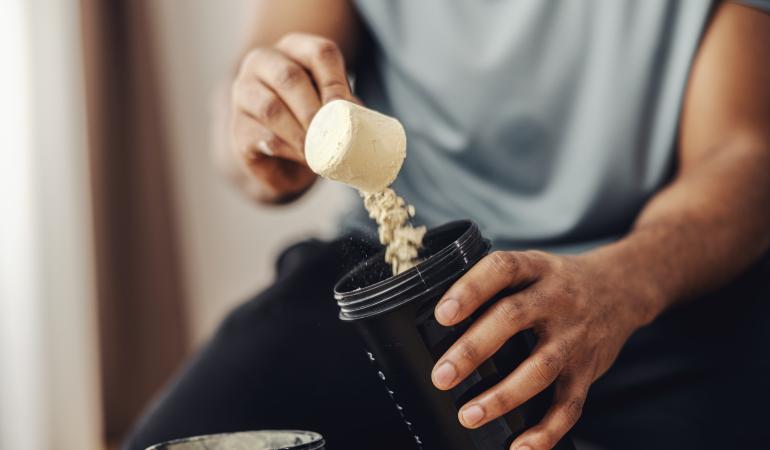
Fifteen percent of people aged fifteen and older who play sports on a weekly basis and who in 2024 occasionally used a sports performance-enhancing product have experienced health problems due to the use of those products. This compares with just five percent in 2016. Among the people who experienced health issues, one in five sought medical advice. These figures were revealed in a study by the National Institute for Public Health and the Environment (RIVM). The main users are young adults, men and strength athletes. They indicate mostly using sport nutrition supplements such as protein, caffeine, creatine or a pre-workout product.
The study does not further specify the types of health issues experienced by athletes. In previous studies by RIVM, users of workout supplements identified such symptoms as perspiration, headache, insomnia, heart palpitations and stomach problems.
Underestimation of symptoms and use
This study is based on data from the Lifestyle Monitor (RIVM, Trimbos Institute and CBS). These figures suggest that the use of sports performance-enhancing products is low. This is probably an underestimation, for example because people are less likely to admit the use of () specific products (such as doping) and because they do not always consider sport nutrition supplements to be sports performance-enhancing. Other studies, including a previous study by RIVM, reveal that the use of specific products as workout supplements could be higher (26-30 percent among amateur athletes training on a weekly basis in the age group 15 to 54 years). The previous study also identified a higher percentage of users with symptoms (40-47 percent). These discrepancies between the two studies are caused by differences in the questions asked and the products investigated.
Ongoing information of consumers
In addition, the sport foresight study (only in Dutch) expects that the use of sports performance-enhancing products will continue to grow through to 2030. RIVM therefore recommends ongoing information of consumers about the health risks of these products. Users may not always be aware of those risks. It is, for example, known for caffeine that a maximum of 400 mg per day and 200 mg per single dose can be considered safe. However, certain products contain more than this safe dose in their recommended quantity for consumption. The safe dose can also be exceeded by what is known as combined use (for example taking supplements and drinking coffee). Consuming too much caffeine can cause symptoms such as headaches, increased heartrate, high blood pressure, restlessness and sleeping problems.
Continue to study use and the market
It is important that we continue to study the use of sports performance-enhancing products and related health issues. For the future, RIVM recommends also including specific questions about the use of sport nutrition supplements and the quantity of products consumed, in the Lifestyle Monitor. It is also important to ask questions about the type of health problems experienced and about combined use with other products (such as energy drinks) and medication (such as soporifics). Another recommendation is to continue monitoring the ingredients in the products on the market, for example by regularly conducting surveys among athletes. Further studies could also be conducted into the difference between the recommended dose and the actual dose. This will make it possible to estimate the health risks.
RIVM conducted this study on behalf of the Ministry of Health, Welfare and Sport.