
In 2020/2021, RIVM studied iodine intake among men and women in the northern part of the Netherlands (mainly Groningen, Friesland and Drenthe). The proper functioning of the thyroid gland depends on a sufficient intake of iodine. There is very little iodine in the soil in the Netherlands, which is one of the reasons why iodine levels in our food are naturally too low. That is why iodine is added to certain types of salt.
Background to the study
The Food Consumption Survey (VCP) maps out what residents of the Netherlands eat and drink. For some nutrients, such as iodine, the VCP’s method is unsuitable. Among other reasons, this is because the quantity of iodine consumed in the form of iodised salt is difficult to estimate. The most accurate way to determine a person’s iodine intake is by examining the urine they have collected over the course of 24 hours.
What did we study?
We collaborated with the Lifelines cohort for this study. This is a cohort study into the health of the population of the Northern Netherlands. In 287 participants (between 18 and 70 years old), the iodine excretion in 24-hour urine samples, collected in 2020/2021, was measured to determine the iodine intake of these participants. For a subgroup from 2020/2021, participants between 31-50 years old (198 participants), the results were compared to the results from a comparable participant group in the period 2006/2007. This allowed us to determine whether this quantity had increased, decreased or stayed the same. Because only a subgroup of the 2020/2021 participants (198 out of 287) was included in this comparison, the median intake is not exactly the same as the median intake of the total participant population from 2020/2021.
What are the outcomes?
The study shows that half of the male participants in the northern part of the Netherlands consumed more than 207 micrograms of iodine per day in 2020/2021. As for the female participants, half consumed more than 159 micrograms per day. The chances of health problems are low if half of the population ingests at least 150 micrograms a day. The intake among men is well above this quantity, whereas women only exceed this threshold by 9 micrograms.
In the period between 2006/2007 and 2020/2021, the intake of iodine among men and women between 31 and 50 decreased by around one-third (Figure 1). This decrease in iodine intake between 2006/2007 and 2020/2021 was likely caused in part by a legislative change in 2008, as a result of which salt used to make bread contains less iodine. Changes in eating patterns and lower quantities of salt in food have contributed to lower iodine intake.
What do these outcomes mean?
Because the iodine intake among women in 2020/2021 is barely above 150 micrograms per day, follow-up analyses have been carried out. These looked at the percentage of women for whom the average iodine intake per day is below 100 micrograms. This quantity is based on the recommendation established by the Health Council of the Netherlands, in which the Council indicated that it would use an intake of 100 micrograms for assessing the adequacy (based on an average requirement). This study showed 4-7% had inadequate iodine intake. Based on this, it can be concluded that no associated health problems should be expected for now. However, it is important to continue to monitor iodine intake among women. After all, getting enough iodine is necessary for fetal development.
Research into pregnant women, who need more iodine during pregnancy (in Dutch) is necessary to determine whether any deficiencies exist among this group.
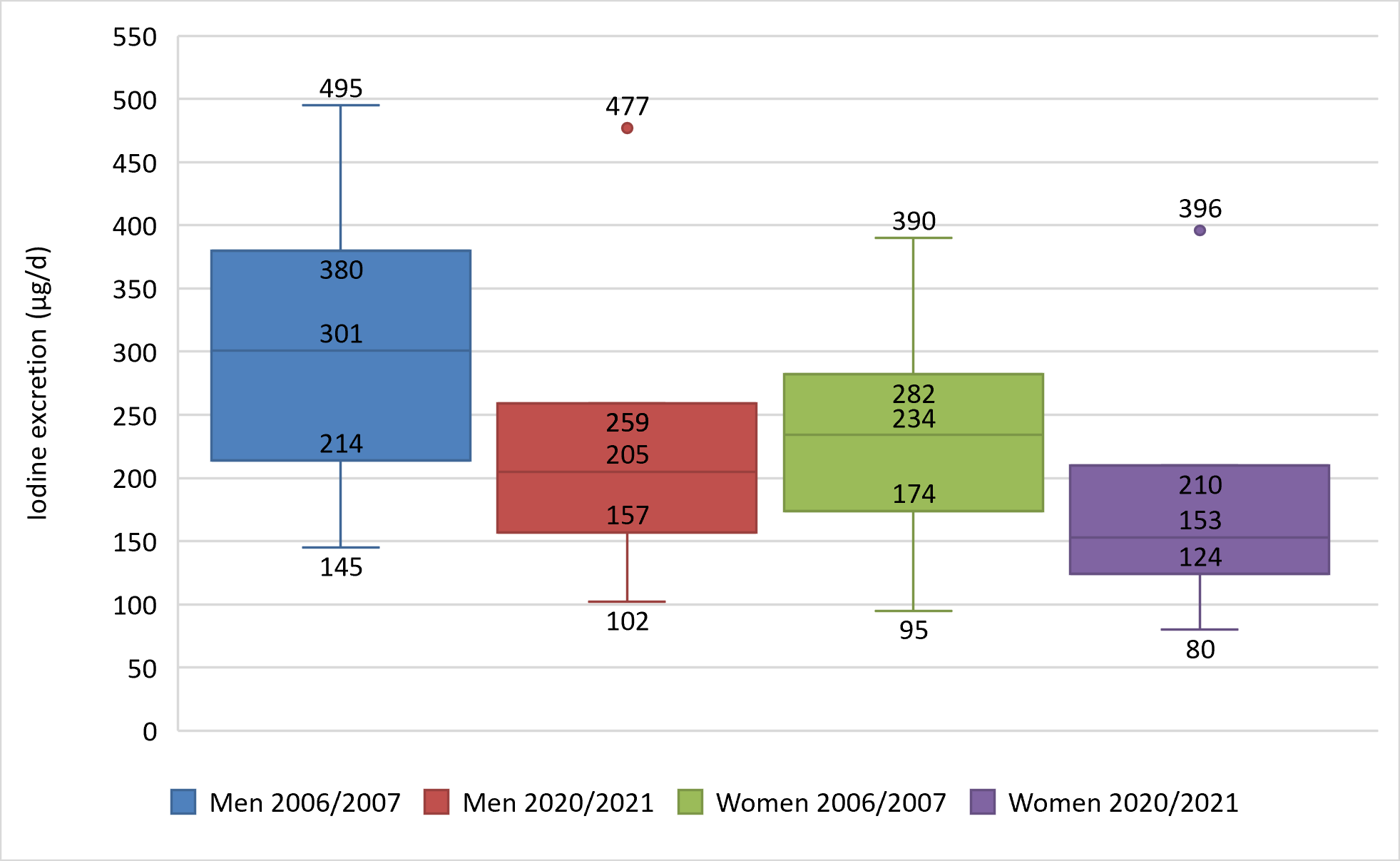
Figure 1. Between 2006/2007 and 2020/2021, the iodine intake among men and women between 31 and 50 years old decreased by approximately one third.