
In 2020/2021, RIVM studied salt and potassium intake among men and women in the northern part of the Netherlands. Half of the men consumed more than 11 grams of salt per day, and for women this was more than 8 grams per day. Too much salt in the diet is bad for health.
Salt is composed of sodium chloride, and too much sodium leads to high blood pressure, causing cardiovascular disease. Products that contain salt include bread and cheese. Potassium has a positive effect on blood pressure, because it counteracts the blood-pressure-increasing effect of sodium. Additionally, sodium and potassium play a role in nerve impulse transmission and muscle contraction. Products that contain potassium include vegetables, dairy, meat and fruit.
Research into salt and potassium
There were two reasons for this research:
The Dutch National Food Consumption Survey provides insights into what residents of the Netherlands eat and drink. For some nutrients, such as salt, this method is unsuitable. This is, among other reasons, because it is difficult to estimate how much salt is added to food during and after preparation. The most accurate way to determine salt intake is by collecting a person’s urine over the course of 24 hours. By measuring the sodium in the urine, the quantity of salt can be determined.
Research by the Dutch National Food Consumption Survey (VCP) has shown that the potassium intake among women could not be evaluated, as this quantity may be lower than is healthy for women. It was therefore recommended to evaluate these intakes using nutritional status research.
What did we study?
We collaborated with the Lifelines cohort for this study. This is a cohort study into the health of the population of the Northern Netherlands. In 6951 participants (between 18 and 70 years old), the sodium- and potassium excretion in 24-hour urine samples, collected in 2020/2021, was measured to determine the salt and potassium intake of these participants. For a subgroup from 2020/2021, participants between 31-50 years old (1300 participants), the results were compared to the results from a comparable participant group in the period 2006/2007. This made it possible to determine whether intake had increased, decreased or stayed the same. Because only a subgroup of the 2020/2021 participants (1300 out of 6951) was included in this comparison, the median intake is not exactly the same as the median intake of the total participant population from 2020/2021.
What are the outcomes?
This study shows that half of the male participants in the north of the Netherlands in 2020/2021 had a daily intake exceeding 11 grams. For half of the female participants, the daily intake exceeded 8 grams. For both men and women, this is above the maximum recommended dose of 6 grams per day. Between 2006/2007 and 2020/2021, the salt intake among men and women between 31 and 50 years old decreased by approximately 13% (figure 1).
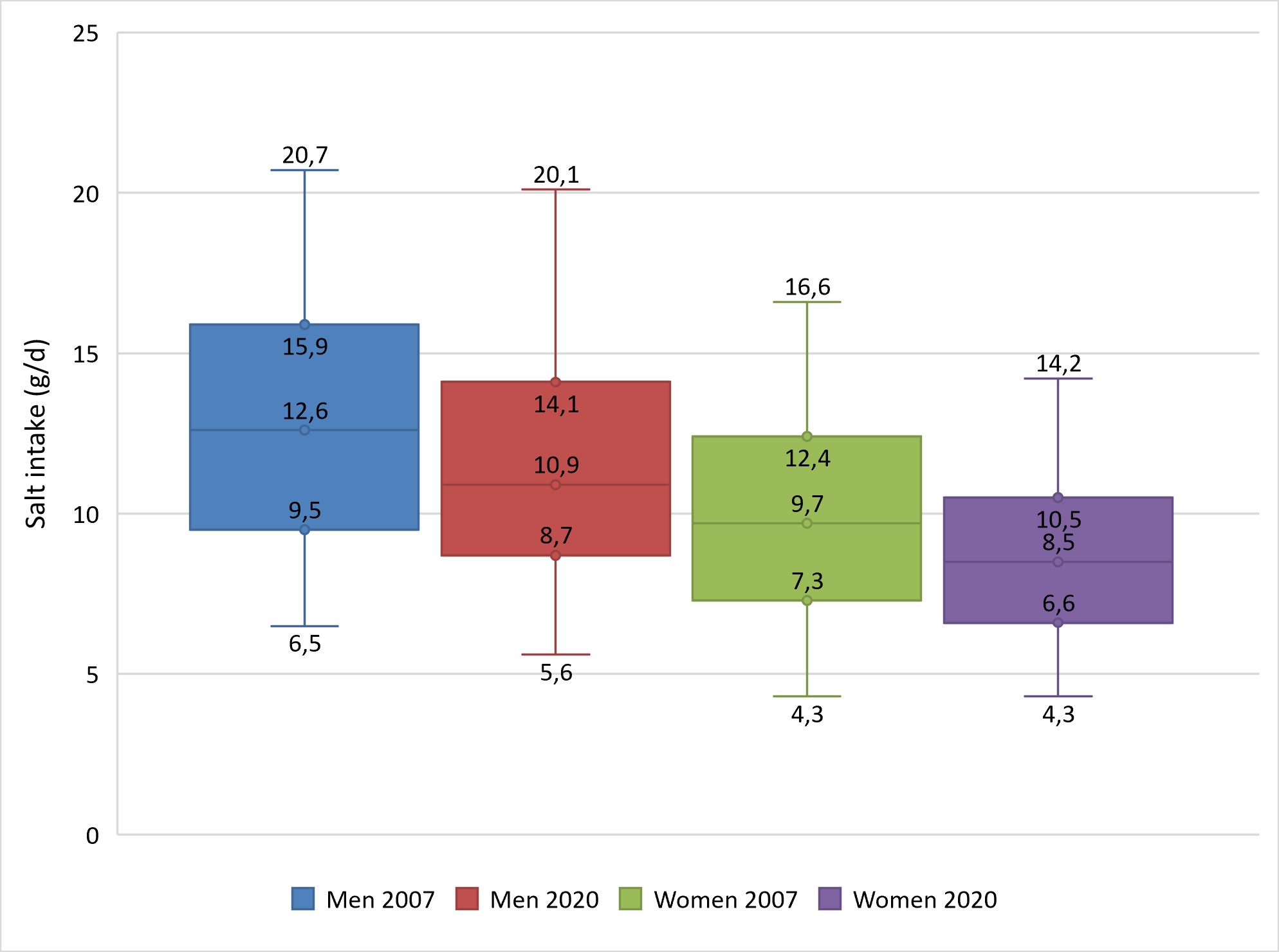
Figure 1. The salt intake decreased between 2006/2007 and 2020/2021 for men and women aged 31-50 years old with approximately 13%.
In 2020/2021, for half of the men, the potassium intake was above 5075 milligrams per day, and for half of the women, this was above 3857 milligrams. These quantities exceed the recommended 3500 milligrams and are therefore sufficient. Intake remained nearly the same between 2006/2007 and 2020/2021.
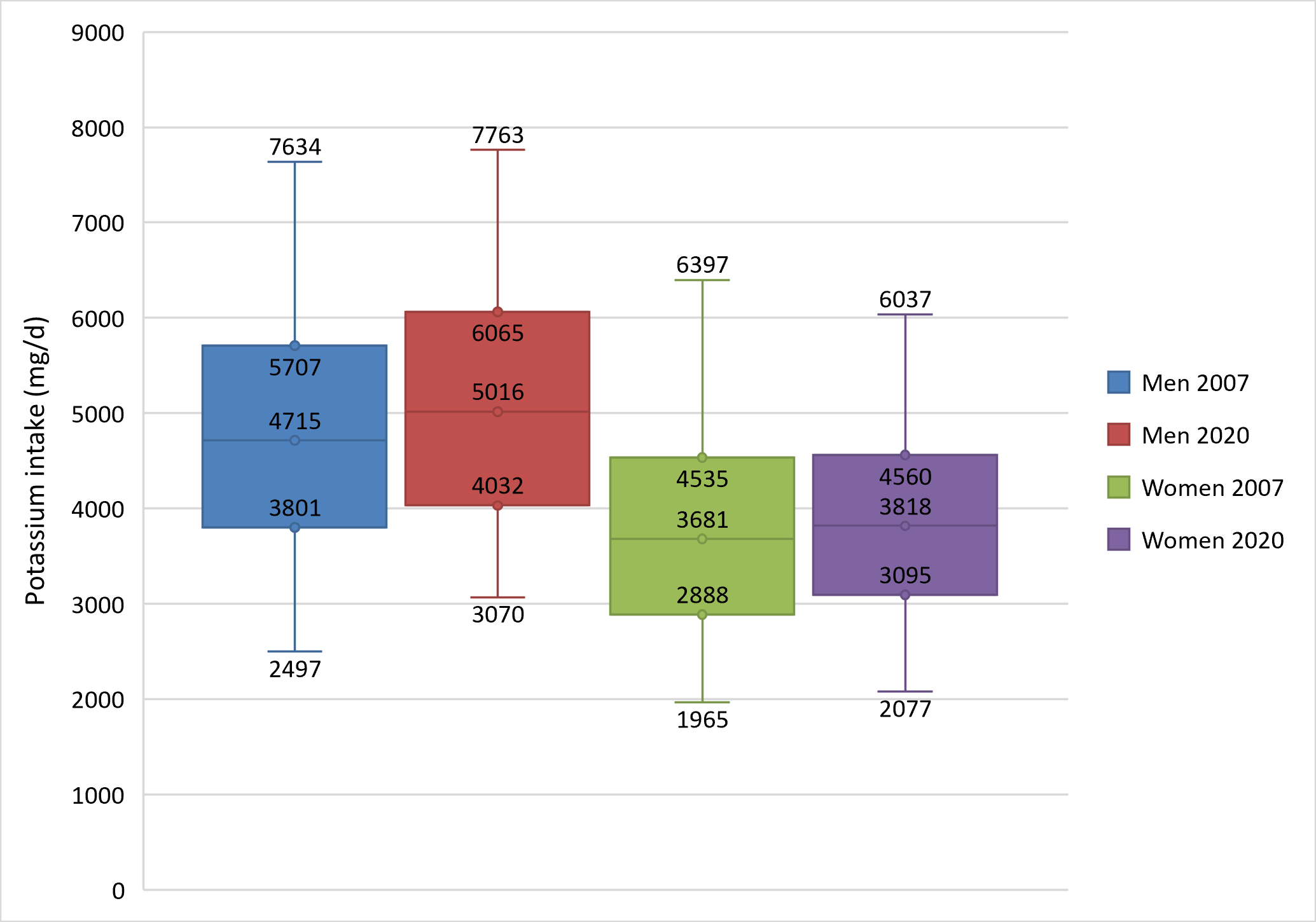
Figure 2. Between 2006/2007 and 2020/2021, the potassium intake among men and women between 31 and 50 years old remained approximately the same
What do these outcomes mean?
The intake of salt still exceeds the maximum quantity of 6 grams per day. However, it has dropped compared to 15 years ago. We come to the same conclusion when we compare our results to the outcomes of the Food Consumption Survey. A further drop in salt intake would require a combination of additional measures. The new product improvement approach is an important part of this. Additionally, we should also focus on changing eating patterns and decreasing the amount of salt added to meals during preparation and at the table.
Potassium intake is above the adequate intake of 3500 mg per day for both men and women. The risk of low intake appears to be low.
Previous research
In 2006, 2010 and 2015, RIVM investigated salt and iodine intake among residents of the Netherlands. This was measured at 8.7 grams per day 2006, 8.5 in 2010 and 8.2 in 2015. The data for this came from the Doetinchem study. A direct comparison with the results from the study described above is therefore not possible.
The research into iodine intake was published in the summer of 2022.